
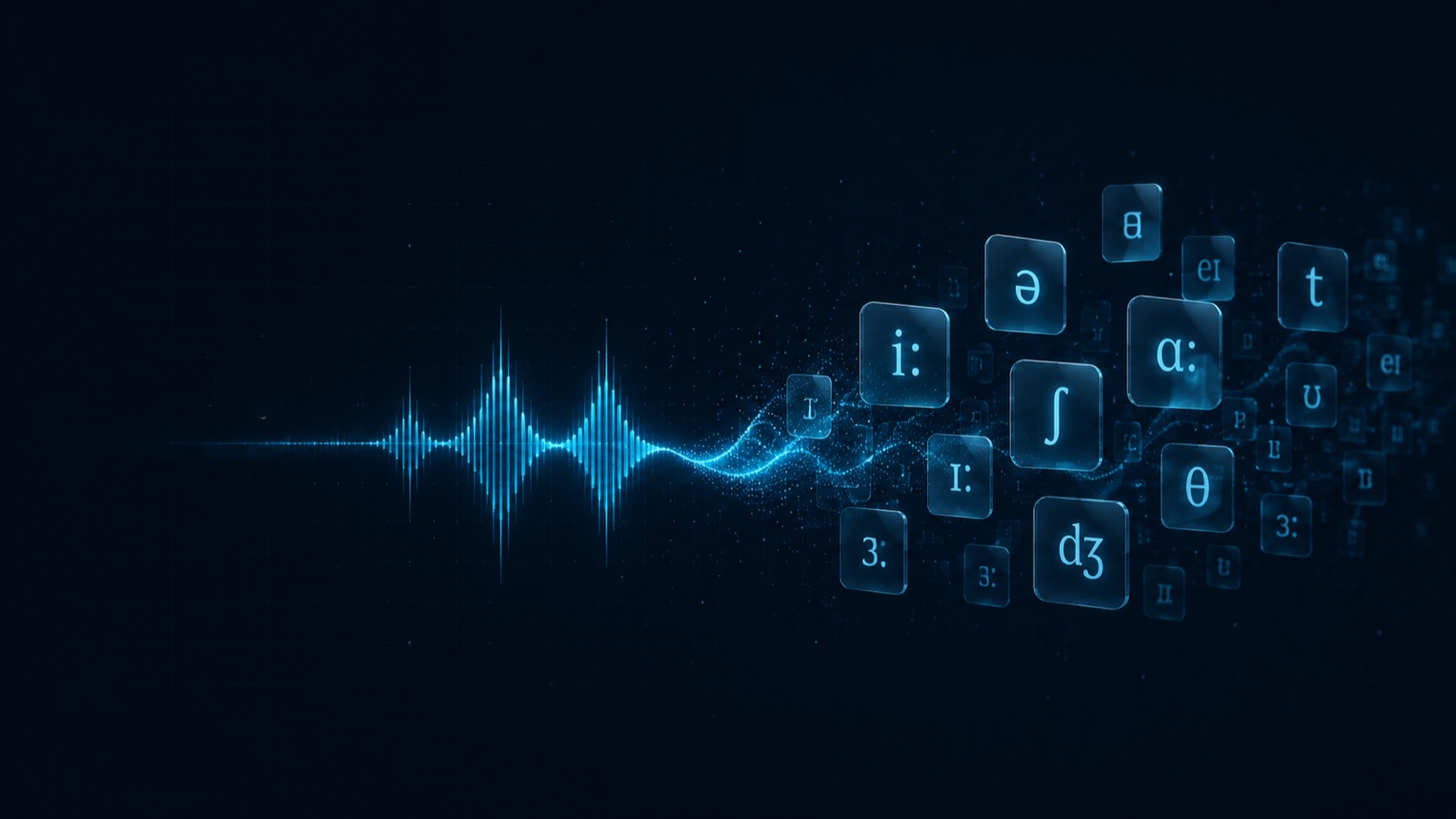
The English word "forth" is five letters long. If you've never heard it spoken, you might pronounce it "forth" rhyming with "north," or "forth" rhyming with "froth," or even with the "th" silent like in "soften."
The correct pronunciation is /fɔɹθ/ - that's IPA, the International Phonetic Alphabet. The symbols look strange at first, but they tell you exactly what to do with your mouth.
Until last month, Wordify only showed you the spelling of a word and let you tap a button to hear it. You'd see "forth" and "fourth" and have no way to know they sound identical. You'd see "tough" and "though" and have no clue that nearly identical spellings can produce wildly different sounds.
That bothered me, so I added phonetics. This post explains why, how, and what it means for you.
Spelling lies. Especially in English.
Most languages have somewhat consistent spelling-to-sound rules. Once you learn the patterns, you can mostly predict how a word sounds from how it looks.
English is not one of those languages.
Consider this single letter sequence: ough. Six different pronunciations:
- through - /θruː/ (sounds like "oo")
- though - /ðoʊ/ (sounds like "oh")
- thought - /θɔt/ (sounds like "aw")
- tough - /tʌf/ (sounds like "uff")
- bough - /baʊ/ (sounds like "ow")
- hiccough - /ˈhɪkʌp/ (sounds like "up")
These are not exotic words. They're vocabulary every English learner encounters in the first month. And spelling gives almost no clue to pronunciation.
French has similar problems. The word aujourd'hui (today) is spelled with ten letters but pronounced /oʒuʁdɥi/ - about half the letters do nothing audible. Russian has stress that changes vowel quality unpredictably, but isn't marked in the standard spelling. Polish has consonant clusters that defy intuition.
If you're learning a new language, you need pronunciation information that goes beyond the alphabet you already know. That's what IPA provides.
What IPA actually is
The International Phonetic Alphabet is a system that assigns one symbol per distinct sound, regardless of language. There's no ambiguity: /f/ is always the sound at the start of "fish," whether you're reading English, French, or Estonian.
A few examples of symbols you'll see in Wordify now:
- /θ/ - the "th" sound in think
- /ð/ - the "th" sound in this (different from think!)
- /ʃ/ - the "sh" sound in ship
- /ʒ/ - the "zh" sound in vision or French journal
- /ŋ/ - the "ng" sound in sing
- /ə/ - the schwa, the most common vowel sound in English ("the," "about")
- /ɪ/ - the short "i" in kit
- /æ/ - the "a" in cat
- /ɔ/ - the "aw" in thought
- /ɹ/ - the English "r" sound (more on this below)
The vertical mark ˈ before a syllable indicates primary stress. So "vocabulary" becomes /vəˈkæbjəlɛɹi/ - the stress falls on the second syllable, not the first.
These symbols are universal across linguistics. Once you learn them, you can read pronunciation in any language. It's the same alphabet whether you're studying Spanish in Mexico or Russian in Estonia.
The turned-r question
The most surprising symbol for many learners is /ɹ/ - the lowercase r flipped 180 degrees. This represents the English "r" sound.
Why isn't it just /r/? Because in standard IPA, /r/ represents a trilled r - the rolled sound in Spanish perro or Italian carro. English doesn't trill. The English r is technically an alveolar approximant, which is a different sound that gets the symbol /ɹ/.
Most learner dictionaries (Cambridge, Oxford) use the simpler /r/ for English because it's more familiar. Linguists and Wiktionary use /ɹ/ because it's more accurate.
I chose to use the linguistically accurate version: /ɹ/ for English, /r/ for trilled languages like Spanish, /ʁ/ for the French uvular r. This means that in Wordify, the symbol you see actually tells you which sound to make. The English "right" looks different from the Spanish "perro" - and they should, because they're different sounds.
This is a small detail, but it adds up. Many learners hear an English "r" and try to roll it because their textbooks taught them /r/. Wordify's transcription, by using /ɹ/, signals: don't roll this. Just glide.
Where the data comes from
The phonetic transcriptions in Wordify come primarily from Wiktionary, the open multilingual dictionary that includes pronunciation data for millions of words. Wiktionary's IPA transcriptions are crowd-edited by linguists and language enthusiasts, then verified against established pronunciation references.
Where Wiktionary entries were missing or unclear, I filled in transcriptions using established phonological rules for each language. For English, I used General American as the default dialect. For French, standard Parisian French. For other languages, the standard prestige dialect taught to learners.
I plan to expand coverage and accuracy over time. If you ever see a transcription that looks wrong, let me know - pronunciation is something I want to get right.
Which languages have phonetics
Six of the seven languages Wordify supports now display IPA:
- English - General American pronunciation
- Spanish - Castilian pronunciation, with notes on Latin American variants where relevant
- German - Standard German pronunciation
- French - Standard Parisian French
- Russian - Standard Russian with stress marks
- Polish - Standard Polish
Estonian is the exception, and on purpose: its spelling is almost perfectly phonemic - letters map to sounds predictably - so an IPA line would mostly just repeat what the word already tells you. It's exactly the kind of consistent-spelling language this post opened by contrasting with English.
Each phonetic transcription appears alongside the word and its translation. Tap the audio icon to hear the word pronounced; read the IPA to understand exactly which sounds you should produce.
What IPA doesn't fix
A few honest caveats.
IPA shows pronunciation, not meaning. You still need to learn what words mean. Phonetics just makes the pronunciation reliable.
IPA can't capture every regional variation. A Texan and a Londoner pronounce English differently. Wordify uses one standardized pronunciation per language. If you're learning a specific regional accent, you'll still need exposure to native speakers from that region.
IPA takes a few sessions to read fluently. The symbols are unfamiliar at first. But after about a week of using Wordify, most users start reading IPA without thinking - the same way you stopped sounding out letters after learning to read.
Audio is still more useful than IPA for absolute beginners. If you're brand-new to a language, listen to the audio first. IPA is most useful once you start trying to produce sounds yourself - you can read the transcription, attempt the sound, and check yourself against the audio.
Why I bothered
Most vocabulary apps don't show IPA. They show the spelling, play an audio clip, and trust you to imitate.
That works for simple words. It breaks down for hard ones. If you can't quite hear the difference between /θ/ and /s/ - between think and sink - you'll mispronounce dozens of English words for years before someone corrects you. IPA gives you a way to consciously notice and learn that distinction.
I added phonetics because I want Wordify to be the vocabulary app for people who actually want to speak the language they're learning. Not just recognize the words on a page. Actually produce the sounds, with native-feeling pronunciation, in real conversation.
That requires noticing what your mouth is doing. IPA helps with that.
Try it
Open Wordify, browse any collection, tap any word. You'll see the transcription right below the audio button. Read it. Listen to the audio. Try to produce the sound. Read the transcription again to check what you did.
After a few words, you'll start recognizing the symbols. After a few weeks, IPA becomes a tool you reach for without thinking.
That's the goal. Pronunciation that doesn't depend on guessing.
See also:
- How spaced repetition actually works - the algorithm Wordify uses to schedule each word, in plain English.
- How Wordify started - the backstory of why I built a vocabulary app that lives on your lock screen.
- Lock screen widgets that actually teach you something - an honest roundup of widget-based learning apps in 2026.
Try the app
Vocabulary that comes to you
Through home screen widgets, lock screen widgets, and notifications. 7-day free trial. No account needed.